Center Celje
Architects: MACH
Location: Celje, Slovenia
Year: 2025
Status: Competition
Program: Residential
Client: Public
Publications:
afasia
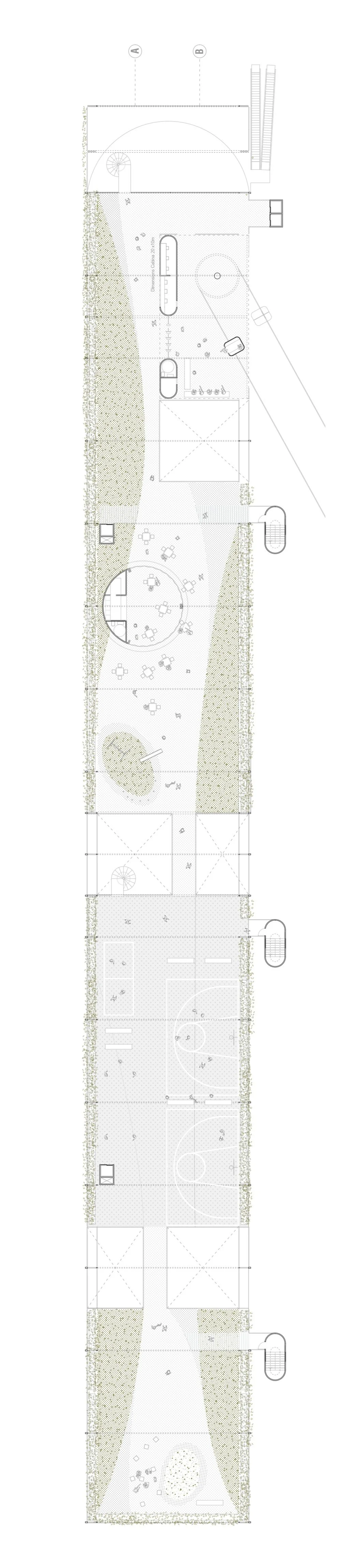
Situated at the confluence of major mobility infrastructures and the everyday life of Celje, the project site operates simultaneously as a point of arrival and a place of transition. Our proposal embraces this duality, using it as an opportunity to re-stitch the fragmented urban fabric on both sides of the railway and the Voglajna River.
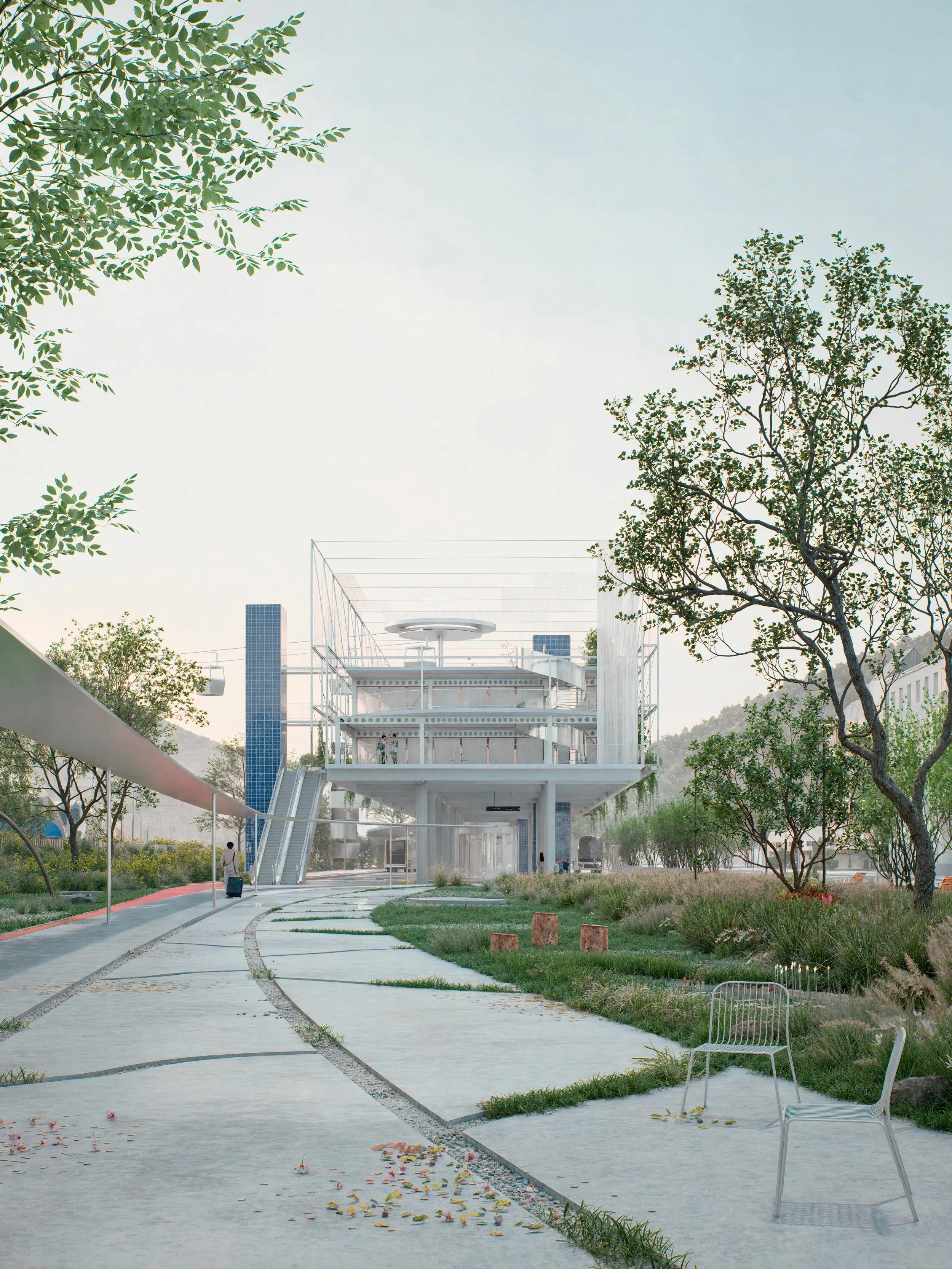
At the heart of the proposal lies a new park designed as an evolving infrastructure that both hosts and supports emerging programmatic elements. Drawing inspiration from the site’s layered character, the park extends the lines of the existing railway, transforming them into landscape trajectories that guide movement, frame views, and weave the site back together. These linear elements link the city with the green corridors of the Voglajna River to the east, reconnect with the Savinja River to the southwest, and establish a new ecological and urban continuum with Celje’s historic centre.
The project is conceived as an integrated mobility hub, connecting the railway station, new bus terminal, parking facilities, and surrounding green areas into a single, legible system. Its layout prioritises seamless intermodality, with direct, weather-protected pedestrian links that shorten transfer times and improve accessibility for all users.
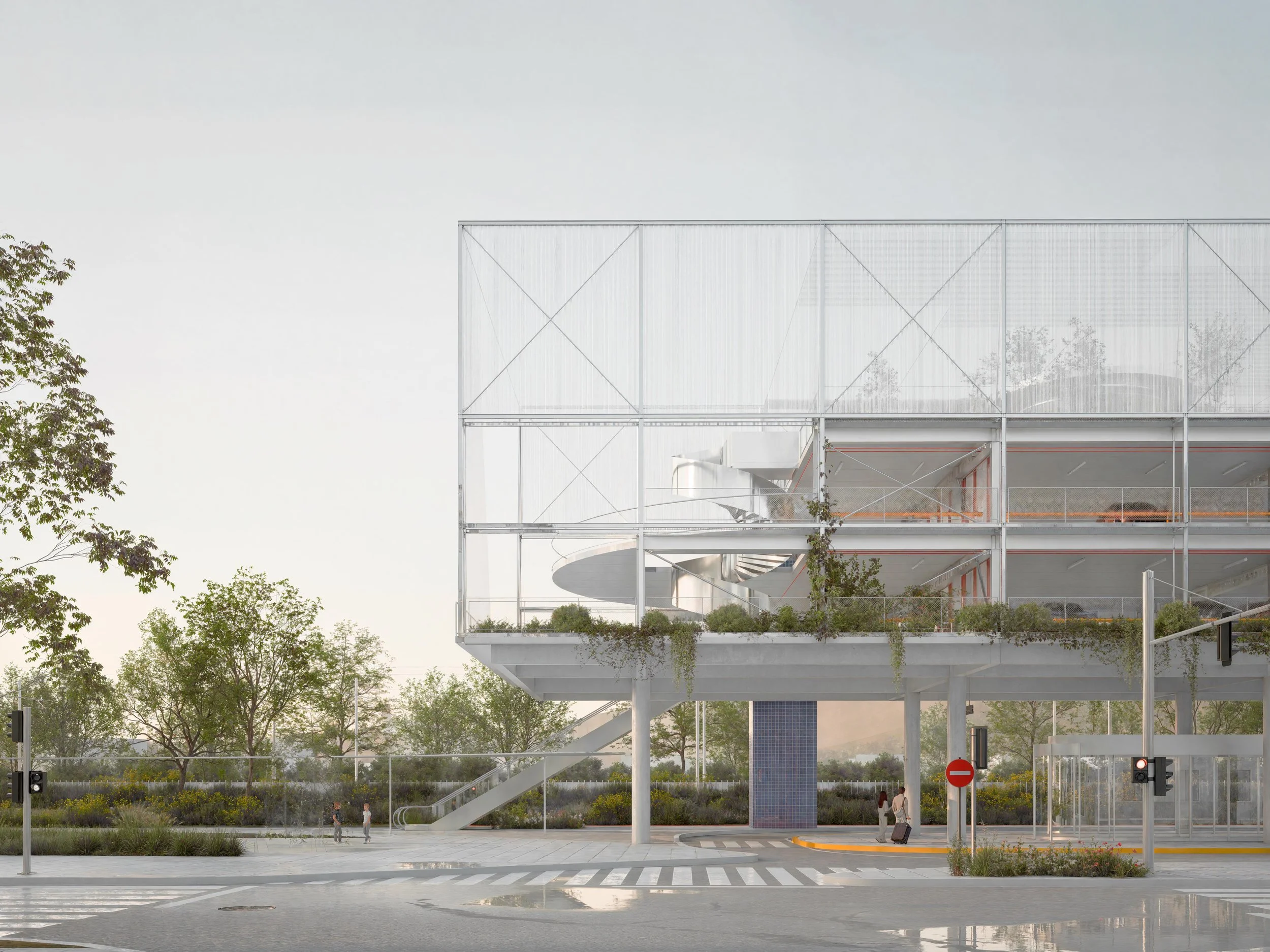
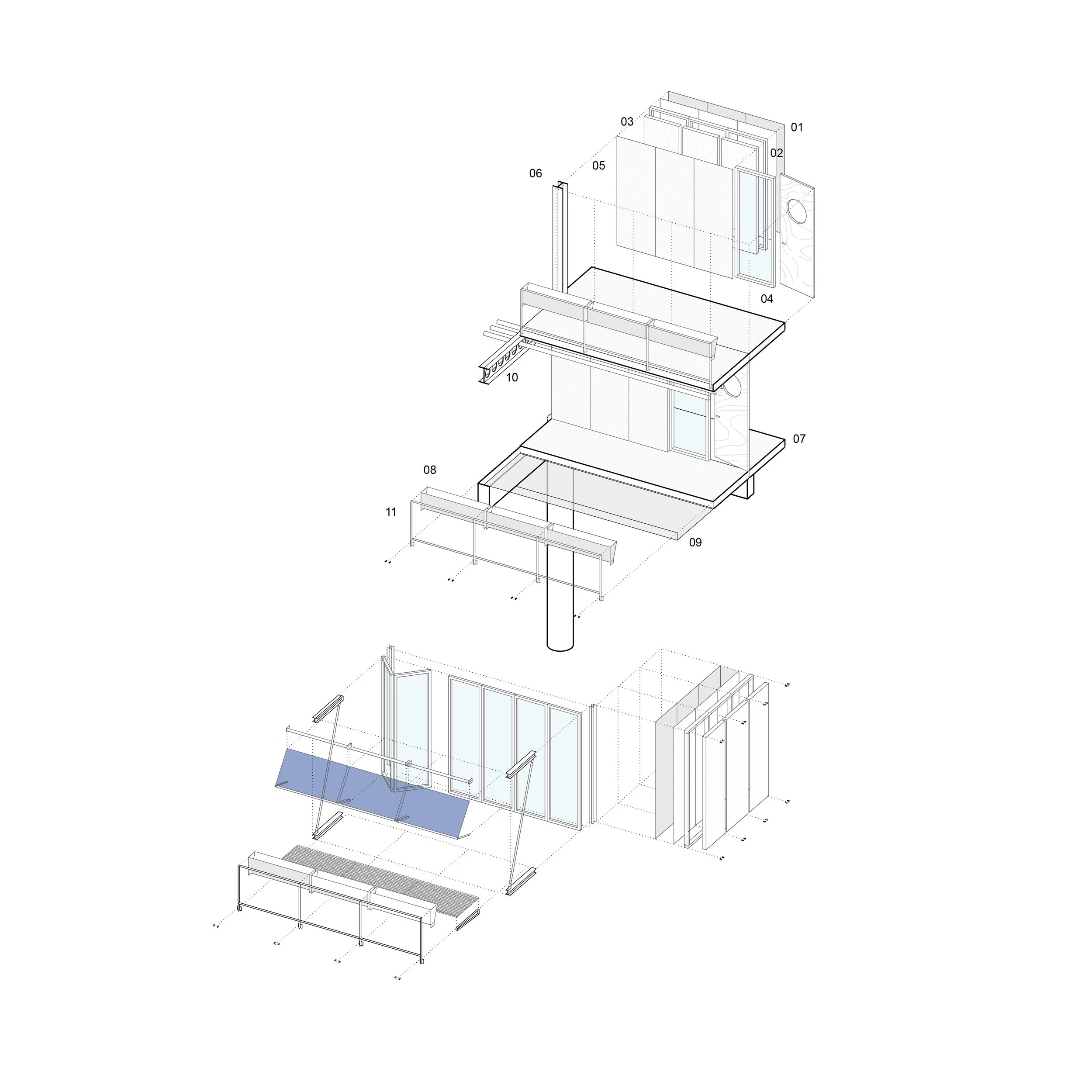
In our proposal, sustainability is a foundational design principle. From the large-scale urban organization to the smallest material decisions, the project prioritizes long-term resilience, environmental responsibility, and circularity.
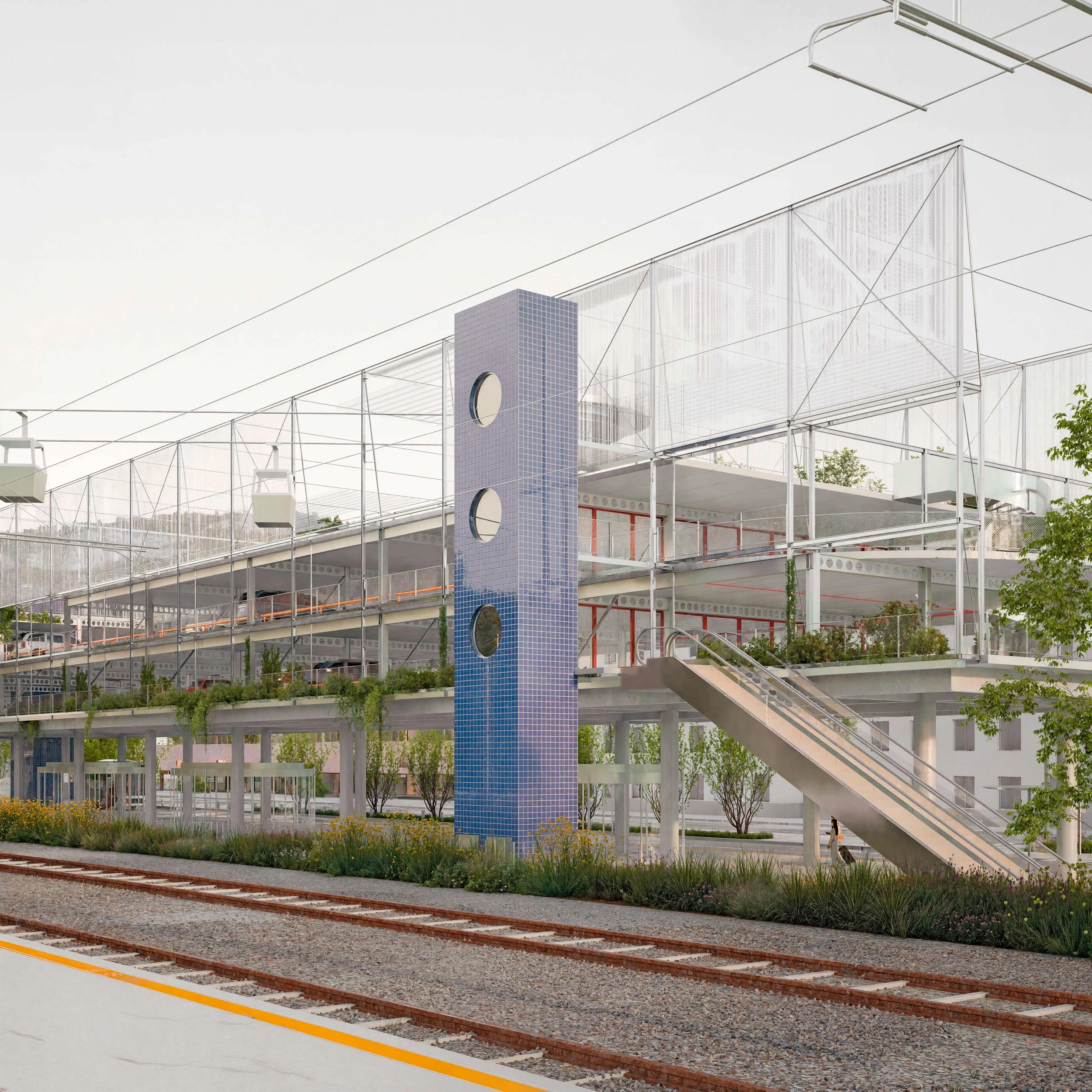
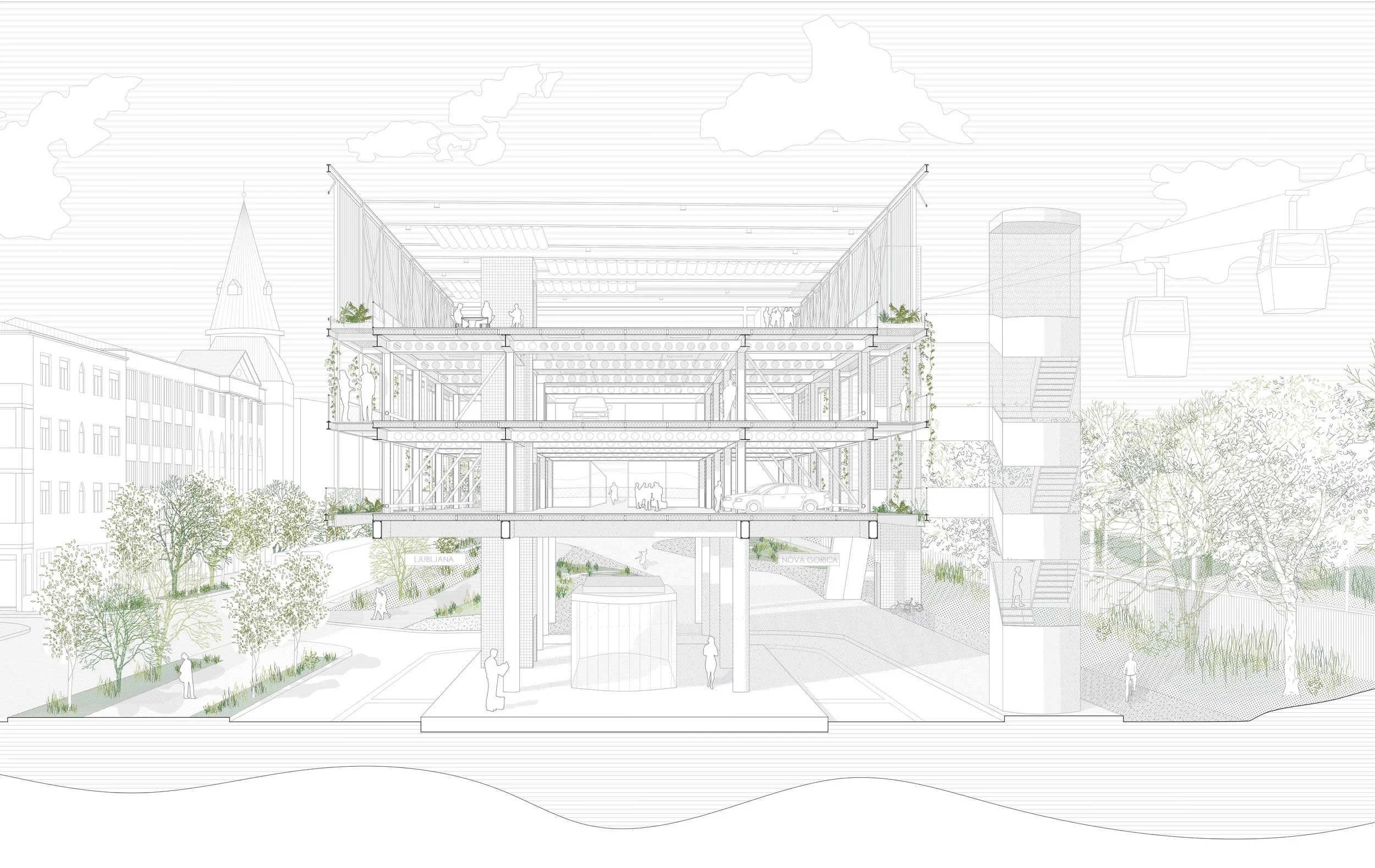
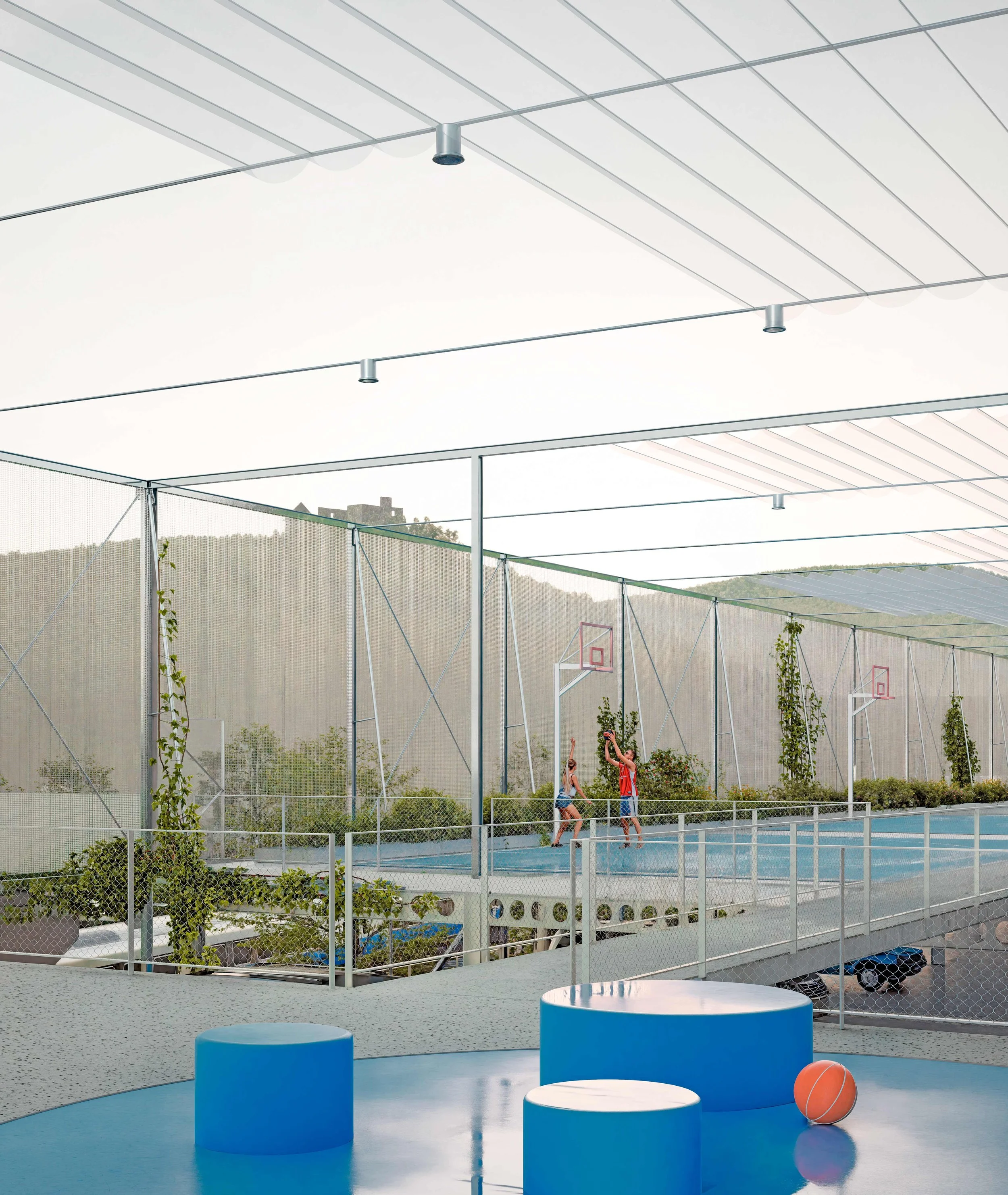
The infrastructural bus station exemplifies this approach: a single architectural gesture that addresses immediate needs—shelter, access, and parking—while being structurally prepared for future transformations. In the initial design, only the principal structure is realized, providing a clear, sustainable and robust framework that can be gradually completed and adapted. The architecture is conceived for flexibility and low-impact construction, emphasizing structural clarity, modular systems, and materials that can be reused, reconfigured, or disassembled. Sustainable energy systems, such as photovoltaic panels integrated into facades and roofs, supply renewable energy on-site, enhancing self-sufficiency and energy efficiency.
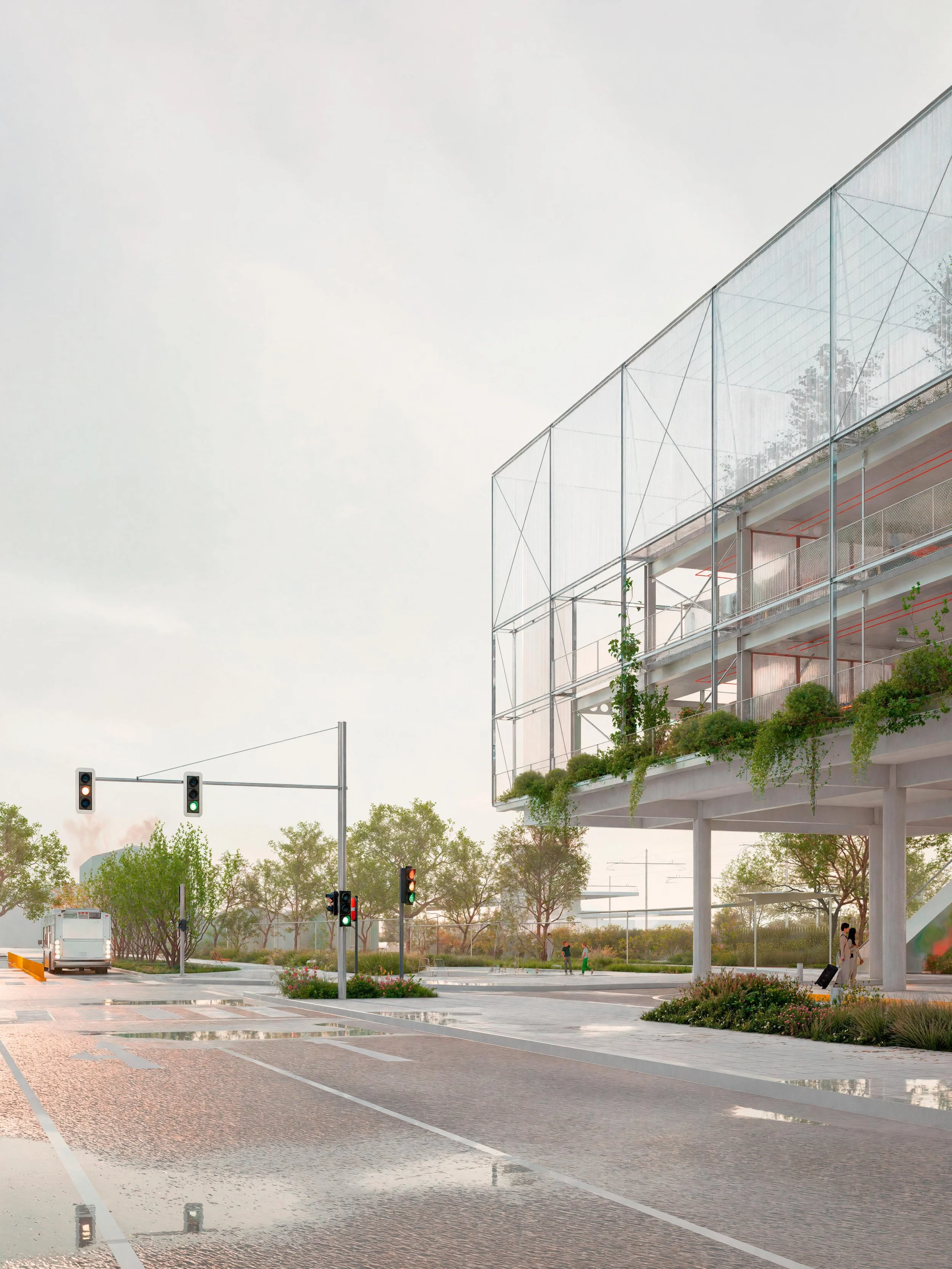
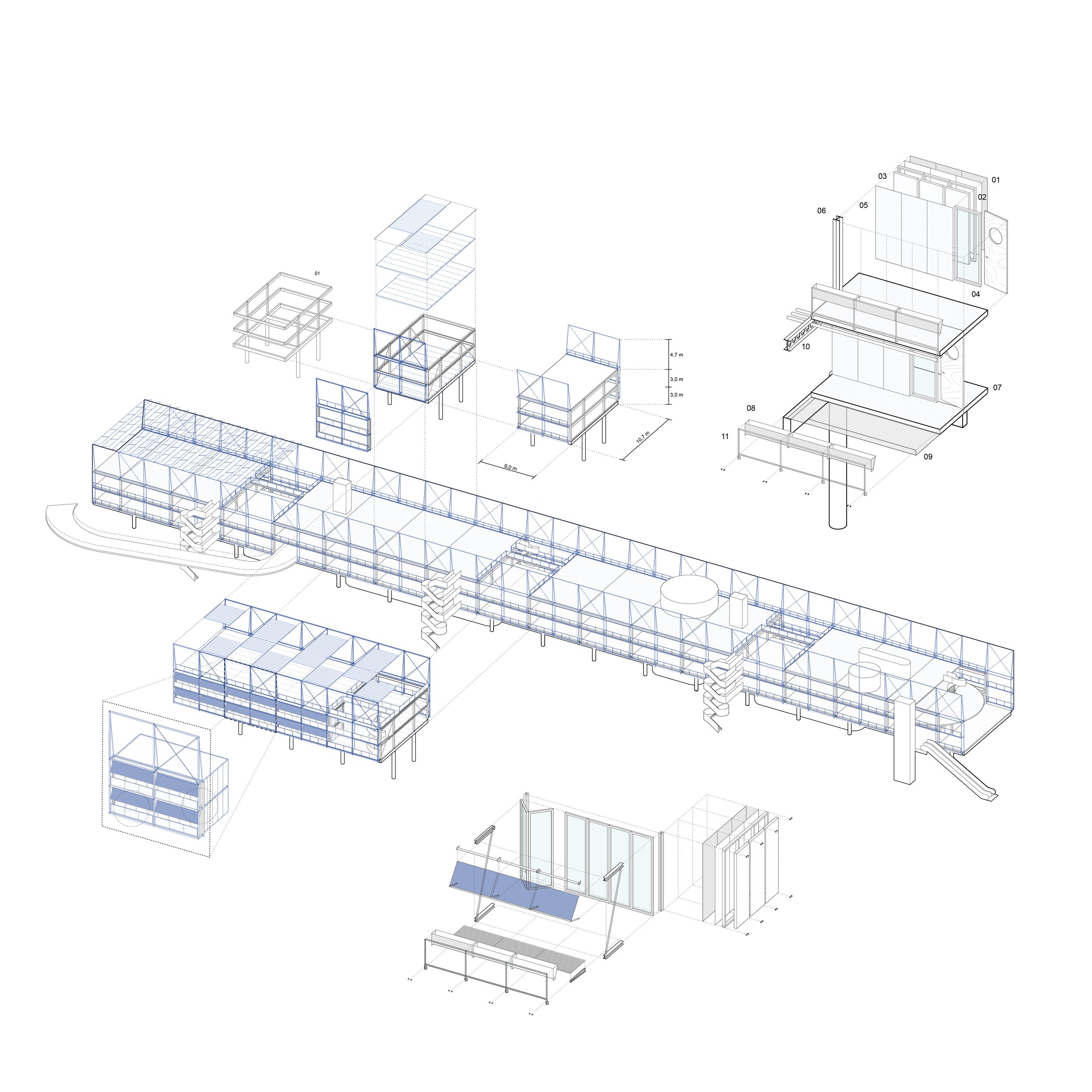
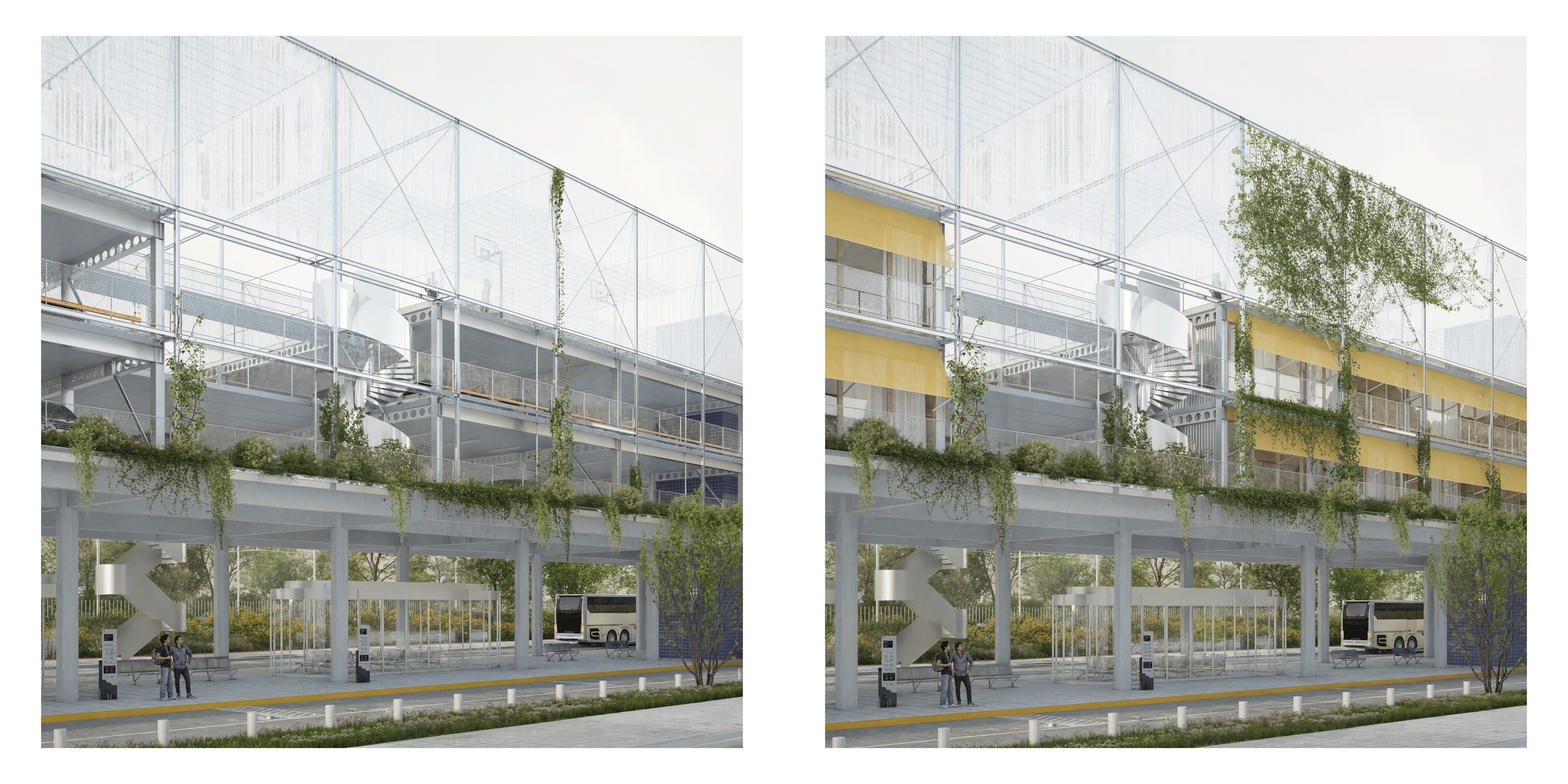
The structural systems are dimensioned to allow future insertion of housing, offices, or mixed-use programs without significant demolition. In parallel, the building integrates a green façade infrastructure, prepared to be naturally colonized by vegetation. This ecological integration enhances microclimate regulation, biodiversity, and user comfort in the future while embedding resilience and long-term adaptability into the project.