Mstetice Primary School
Architects: MACH + Aramé Studio
Location: Mstětice, Czech Republic
Year: 2025
Status: Competition
Program: Primary School
Client: Public
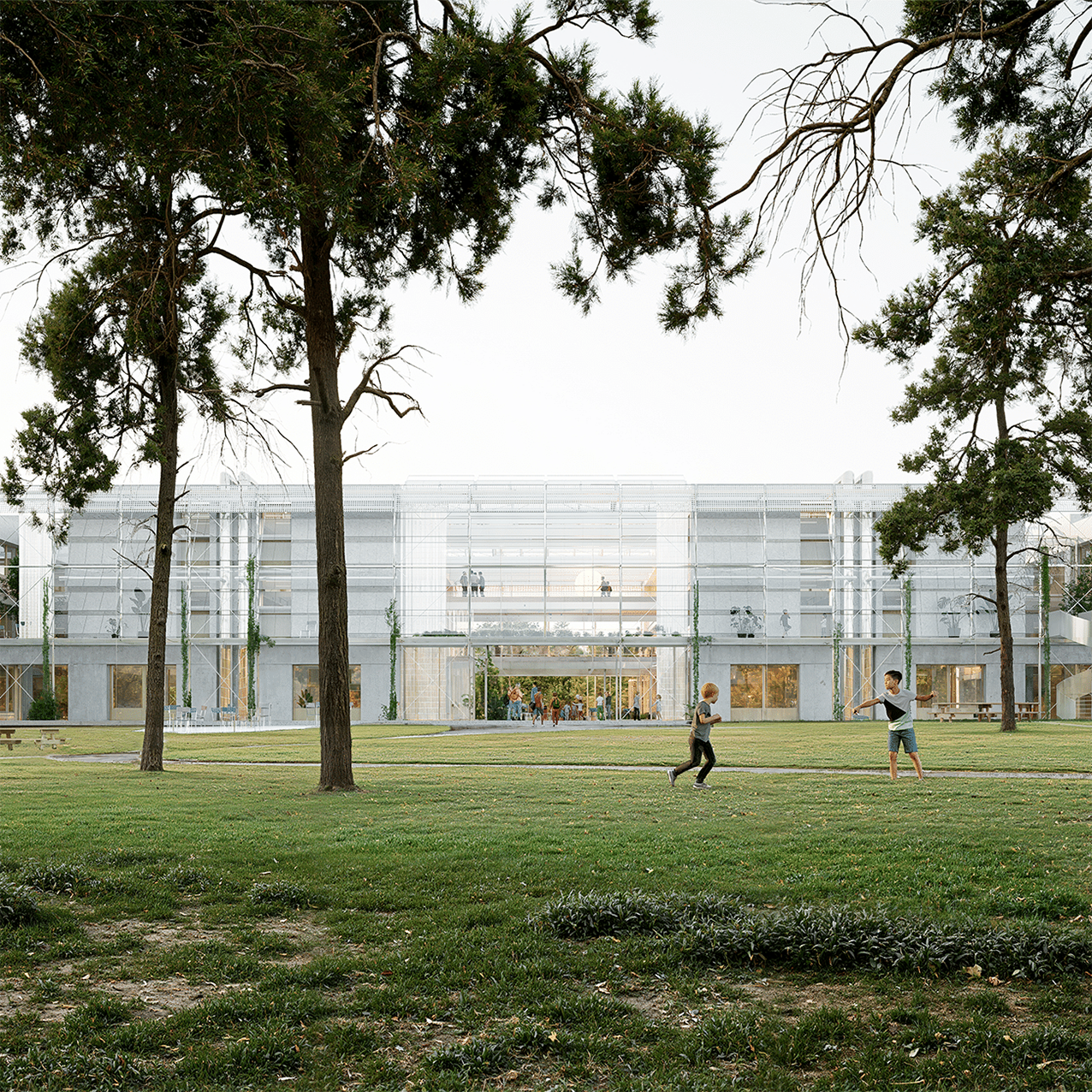
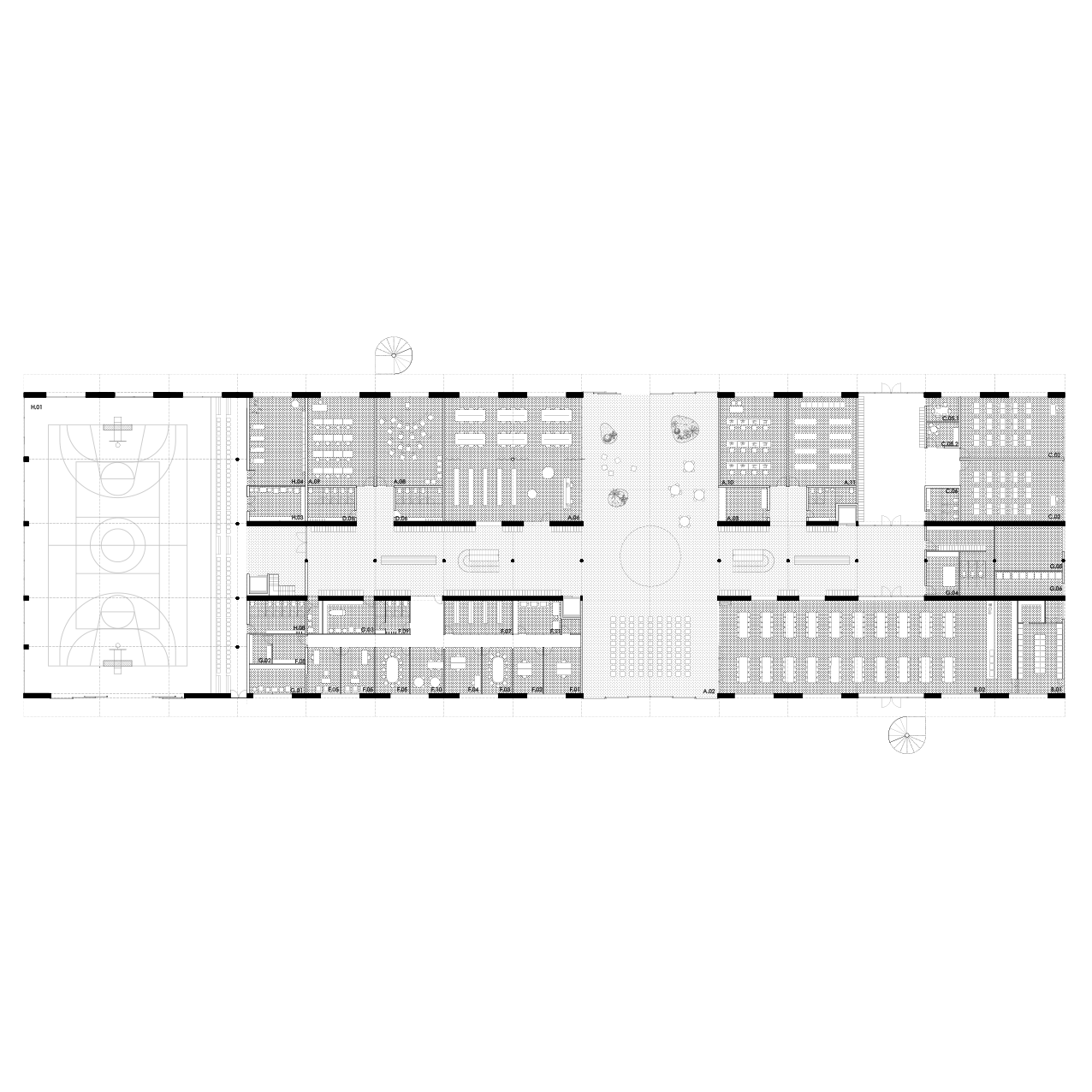
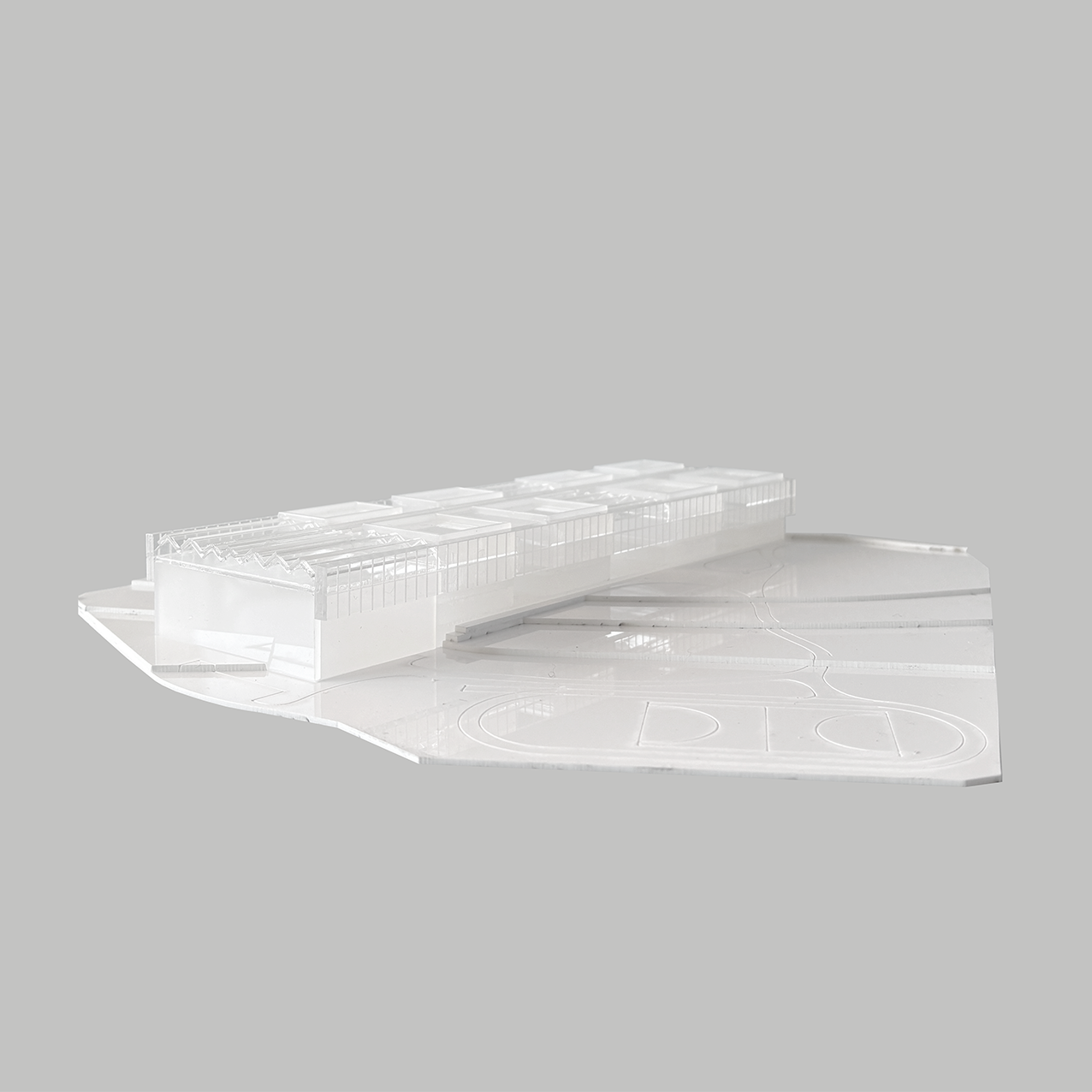
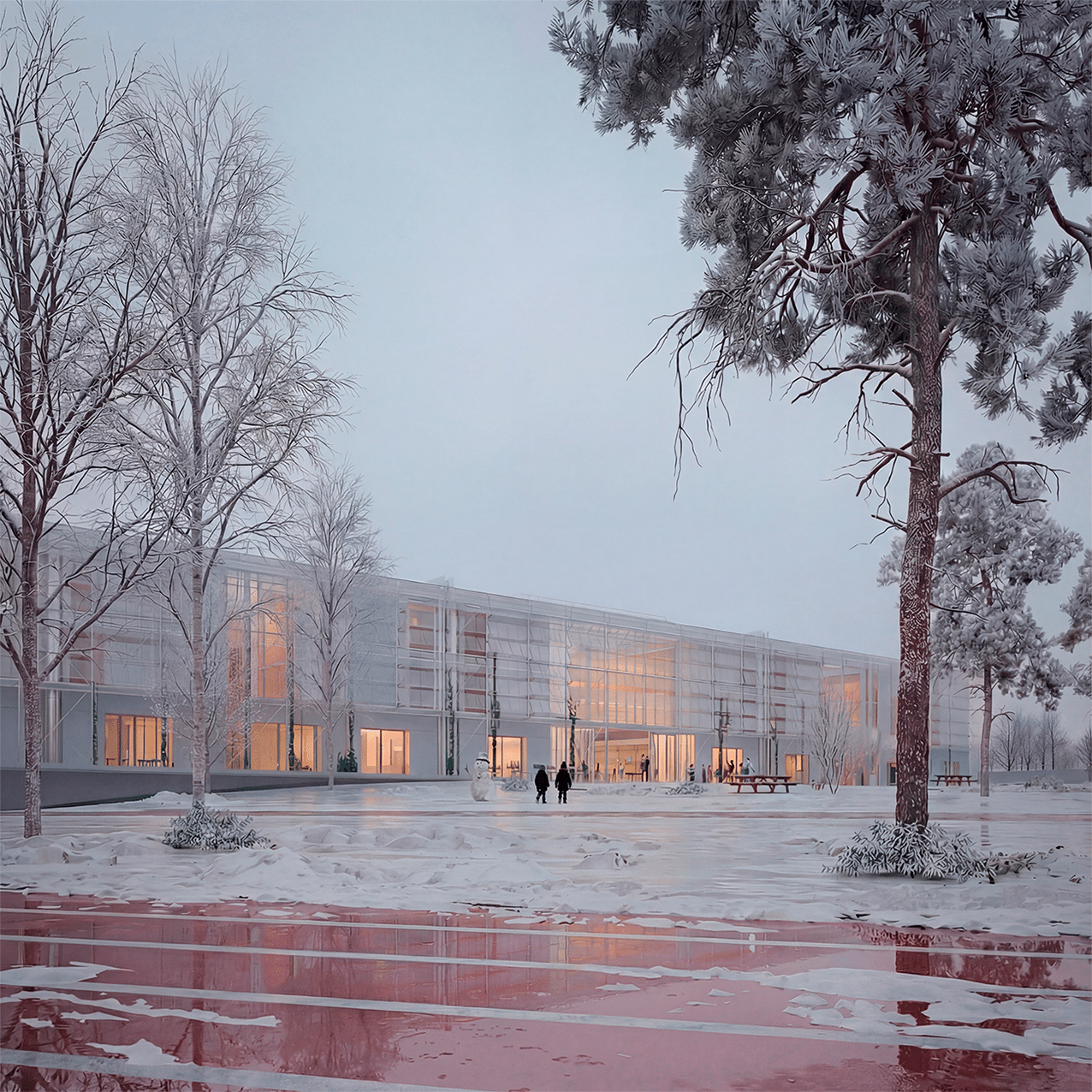
The proposal envisions the new Primary School in Mstětice as a vibrant social anchor for the emerging neighbourhood, placing human relationships at the centre of the architectural strategy. The main objective is to cultivate environments where pupils can meet, interact, and grow together, understanding education as the transmission of knowledge and as a shared civic experience.
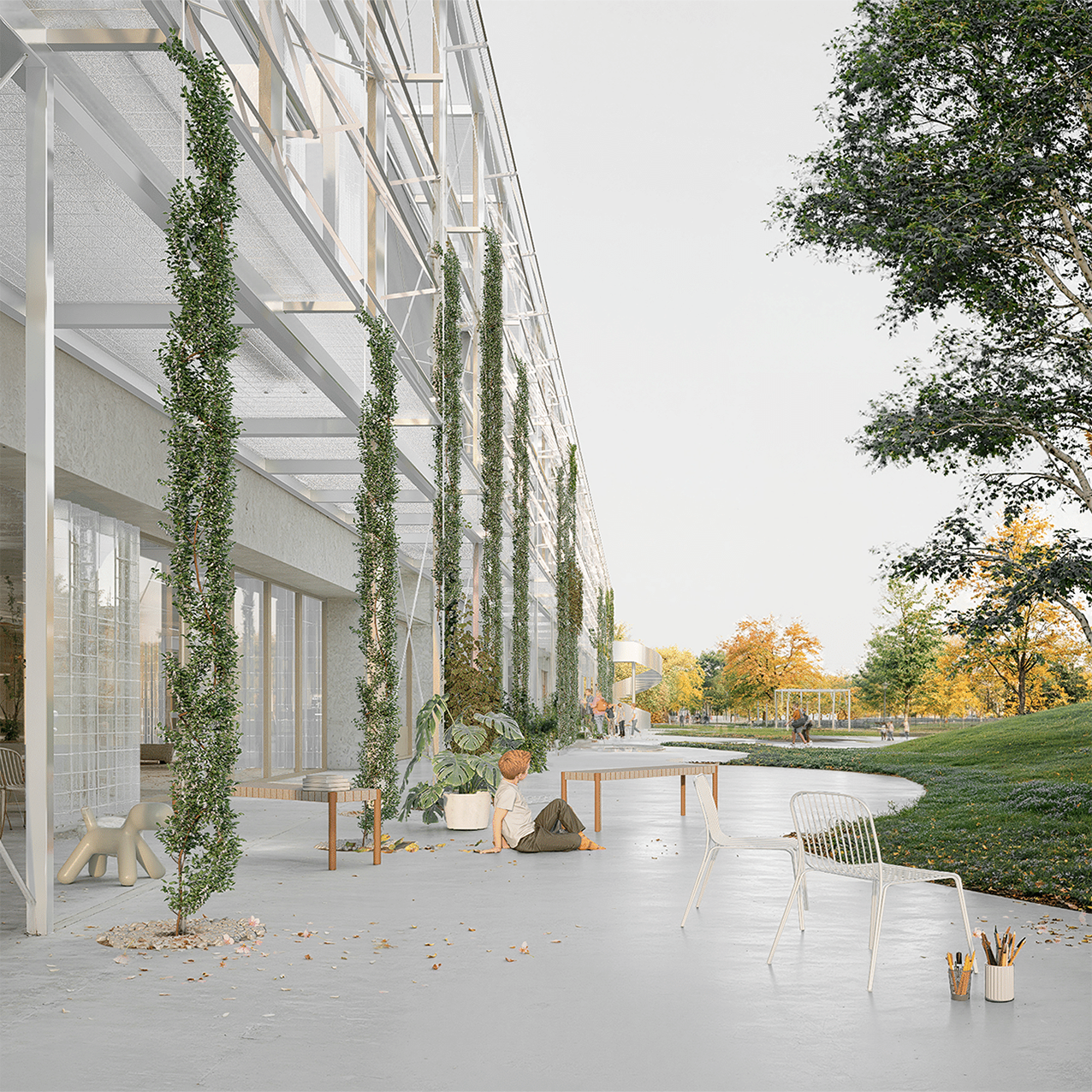
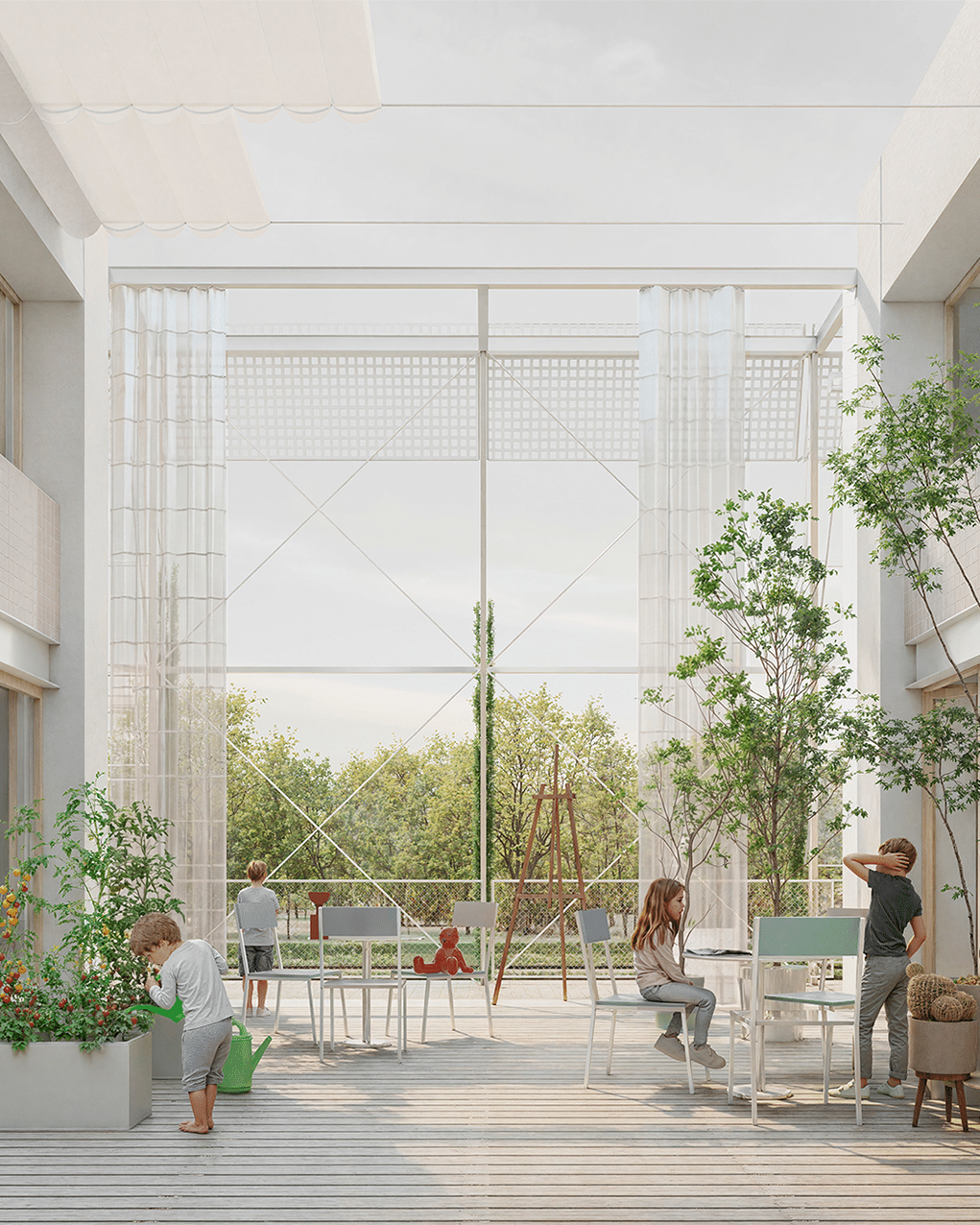
To achieve this, the project adopts a compact and efficient building morphology that minimizes footprint while maximizing opportunities for encounter. The school is structured around a sequence of intermediate, semi-interior spaces: thresholds between classrooms, circulation areas, courtyards, and shared programs. These interconnected zones form a rich social landscape in which learning naturally expands beyond formal boundaries.
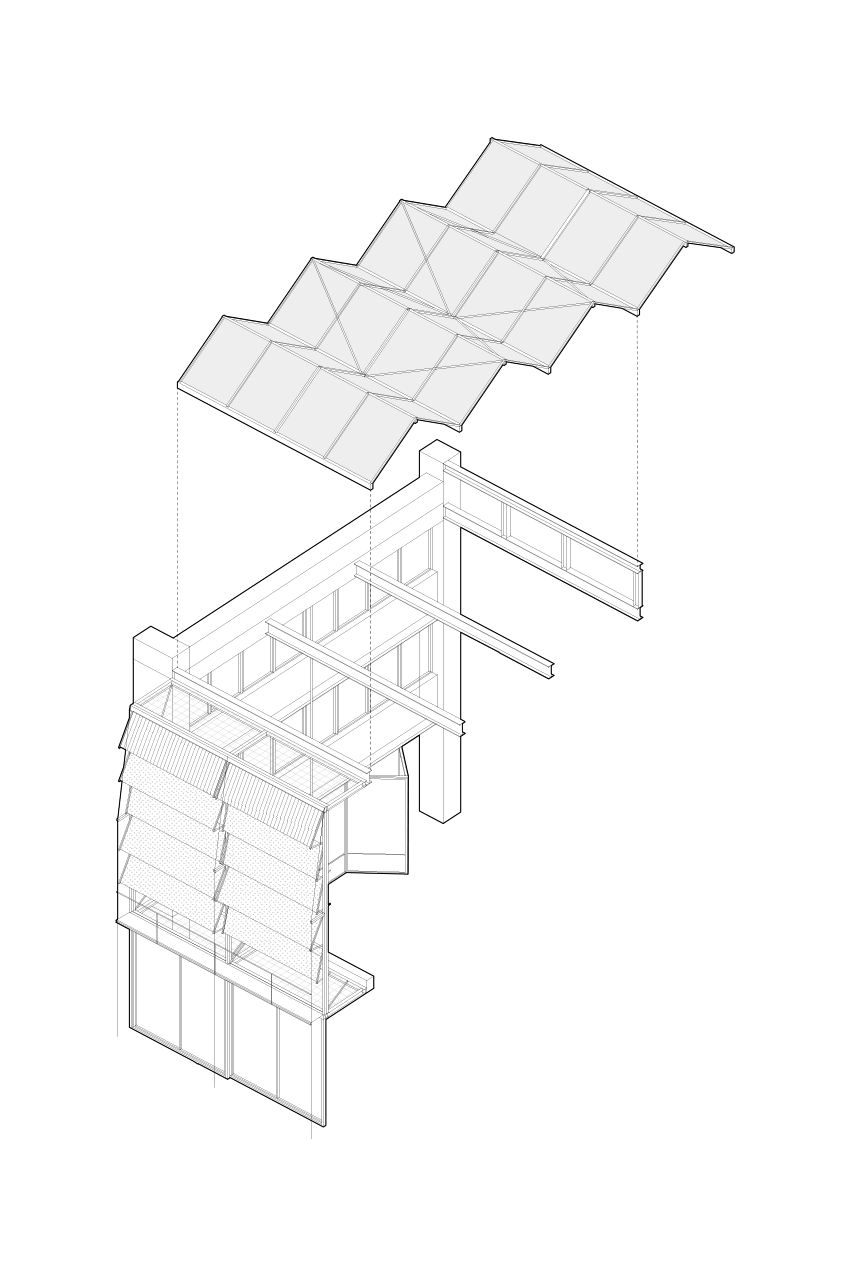
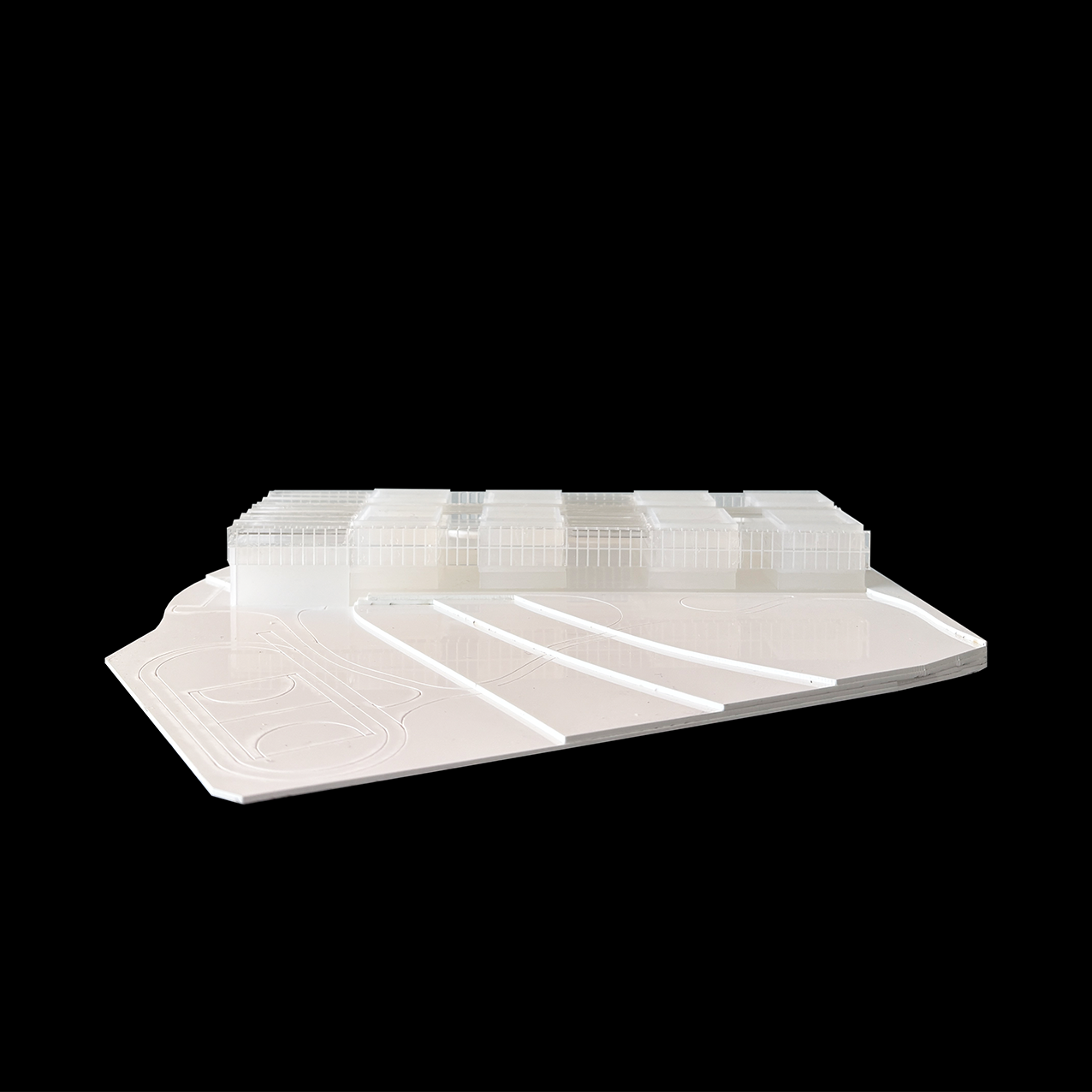
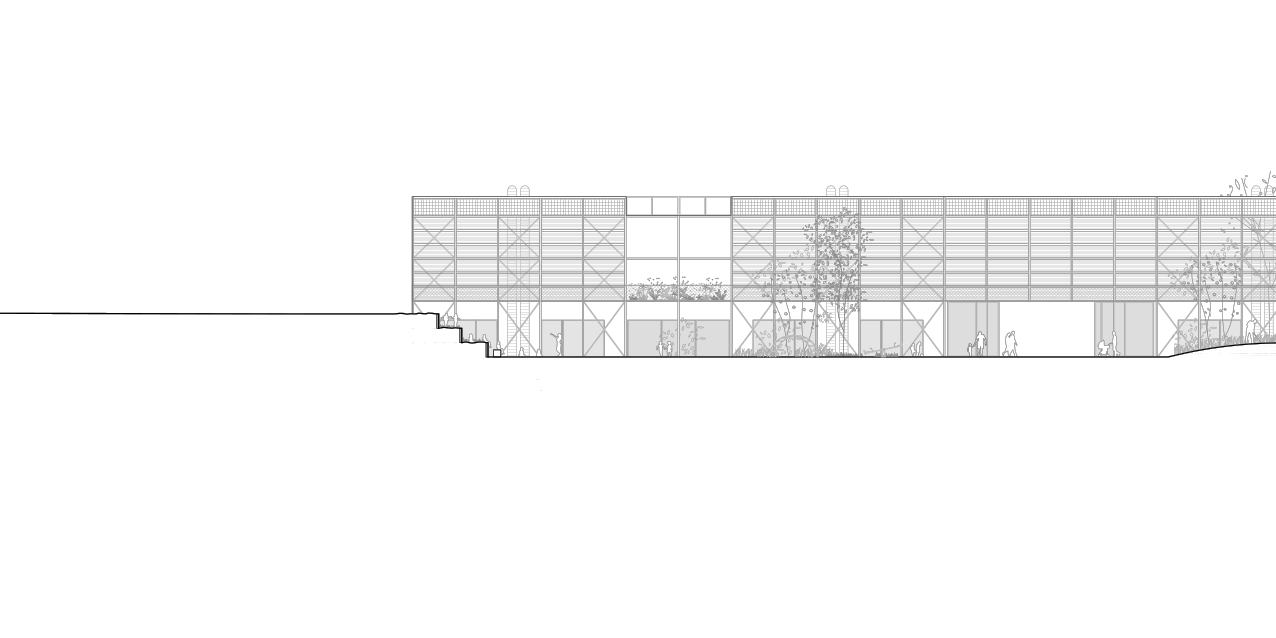
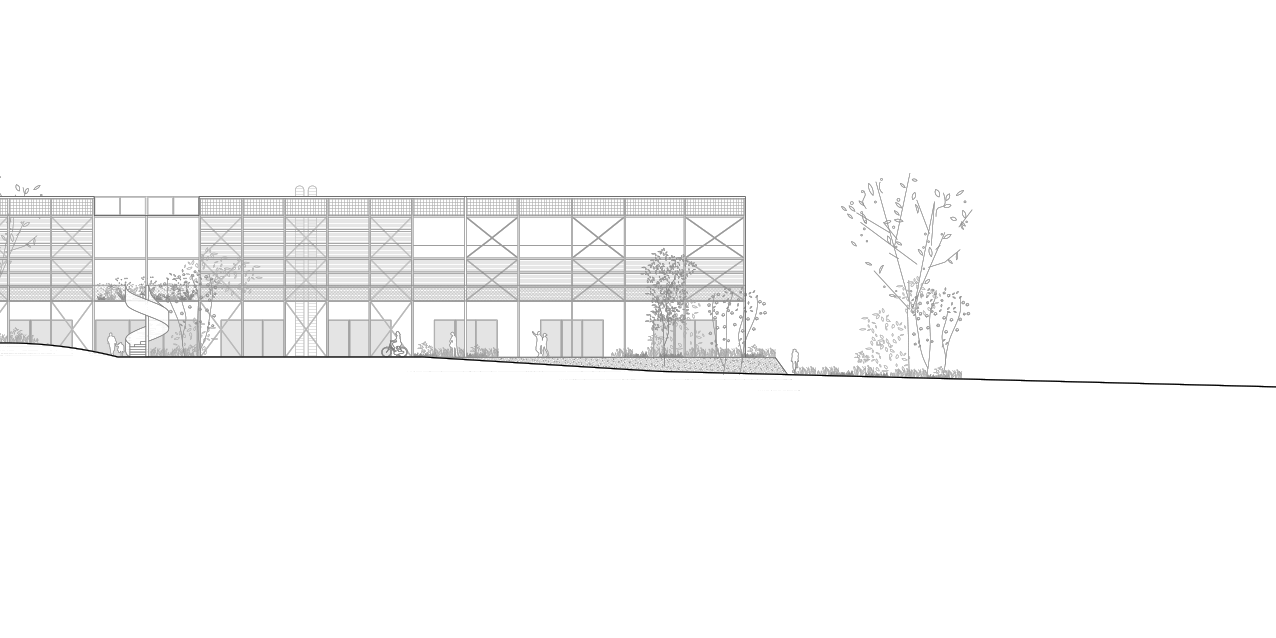
The school is conceived as a linear, rectangular volume that articulates the entire functional programme with precision and clarity. The building comprises three levels above ground and a semi-underground half level that accommodates the sports facilities, ensuring a direct connection to the exterior areas.
The internal organisation is structured around a circulation system that generates a cross-shaped spatial framework. This spatial cross becomes the principal ordering device of the project, guiding orientation, movement, and the relationship between programmes. At its intersection, the main entrance and the auditorium form a generous civic threshold; an open, welcoming space that connects with both the urban front and the green areas at the rear. This central void can fully open to its surroundings, allowing the school to operate as an active social venue for the new neighbourhood.
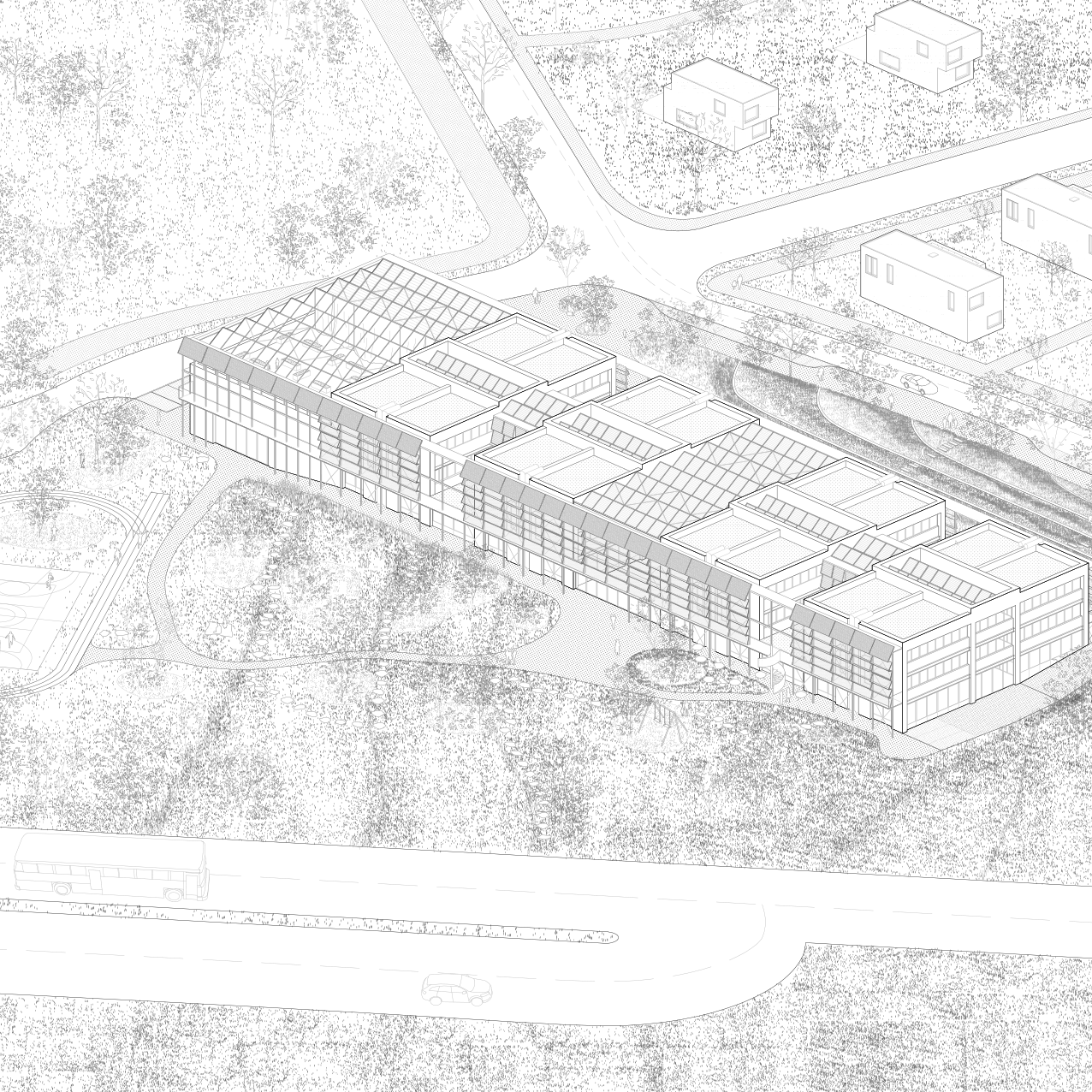
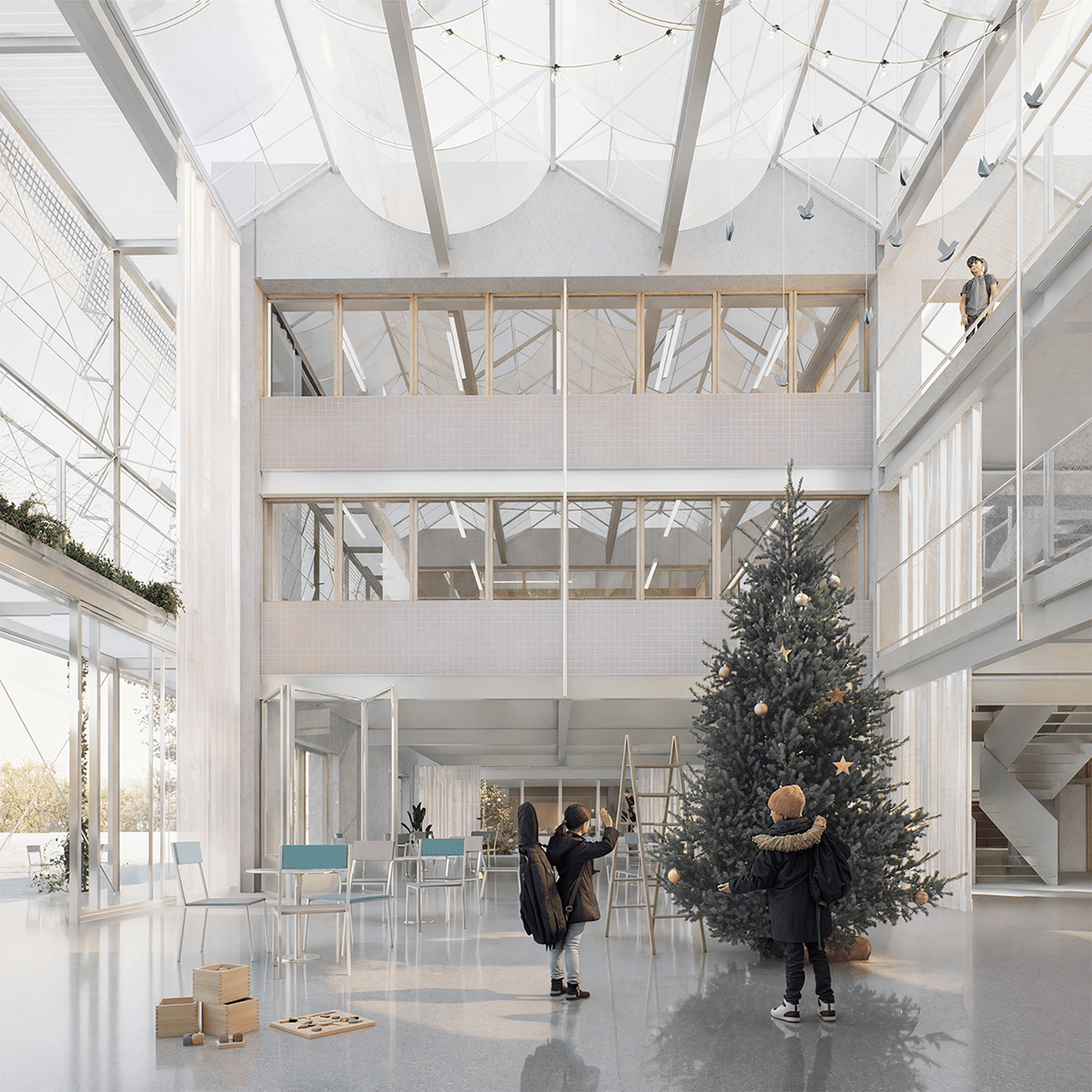
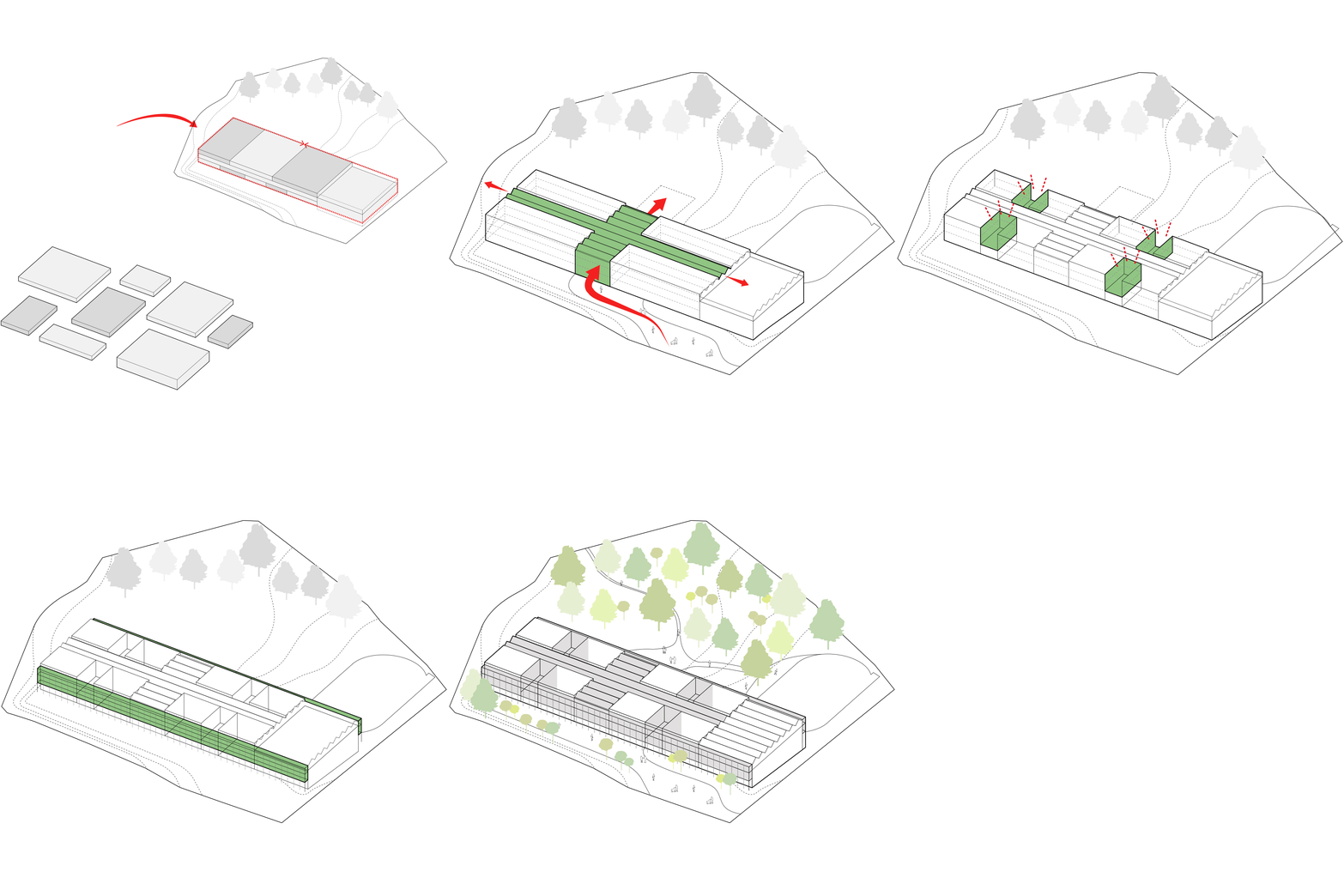
The school is conceived as a highly adaptable architecture, capable of evolving in response to future educational needs and community growth. The compact cores and sequence of semi-interior and exterior spaces establish a modular framework that allows for logical expansion, both vertically and horizontally. Also, future programme additions could be accommodated on top of the sports hall at the third level, or within the surrounding landscaped areas, reinforcing the coherence of the overall design.